
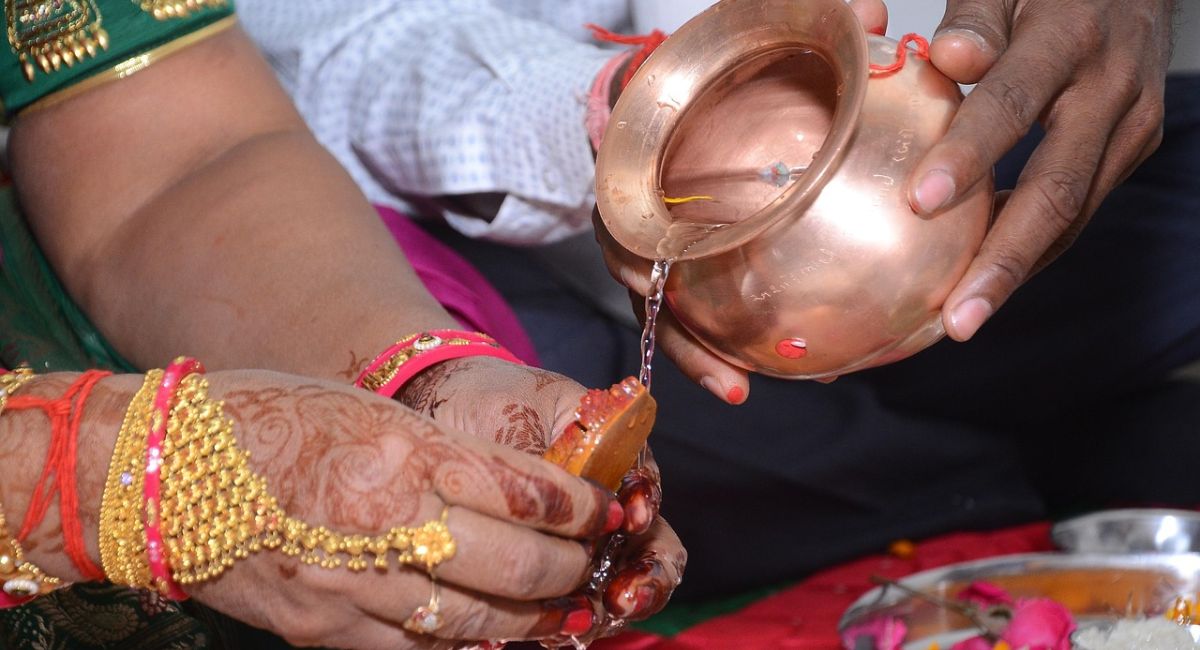
The Satyanarayan Pooja Ukhane is a great tradition among the married women, which links them to the domestic practices of the women and enhances their Bhakti and devotion.
These Hindu religious practices do not only involve chanting but they unite families, provide blessings, prosperity, and protection during Kali Yuga. The narration of Vrata katha stories in the Pooja reminds all that they should be devout, patient and have faith in their deeds as depicted in the stories of Satananda (Brahmin), Laksapati (merchant), and Lilavati and Kalavati.
Although it was in suspension even in the contemporary houses, by learning and practicing the best Satyanarayan Pooja Ukhane, one experiences a significant touch to tradition, and it also brings a moment of joy and spiritual upliftment to the whole family.
Value and Significance of Satyanarayan Pooja Ukhane
A Satyanarayan Pooja Ukhane is not just a chant, it is a symbol of love, respect and custom. These lines are used by women to bless their husbands, children and family members by invoking protection against these Kali Yugas. These Hindu religious practices are inbuilt in Bengali devotional literature that occasionally Satya Pir is also equated with Satyanarayana in the process of Hindu-Muslim culture fusion. Plantain, ghee, milk offerings as well as Sirni or sinni (offering) are an expression of generosity and faith.
Reciting Ukhane also strengthens familial bonds. Merchant’s daughter devotion stories, Vrata kathā stories, and the trials of Candracūḍa / Candraketu (king) highlight the rewards of dedication. Scholars cite Skanda Purāṇa and Bhaviṣya Purāṇa to show how Satyanārāyaṇa worship evolved, blending traditional Hindu festivals with everyday women’s household rituals. Learning these Ukhane connects modern homes in the USA to centuries of cultural richness.
Why Married Women Chant Ukhane During Satyanarayan Pooja
Married women chant Ukhane to seek protection and prosperity for their families. The stories of Śatānanda (Brahmin) and Lakṣapati (merchant) illustrate that devotion and completing the Vrata brings material and spiritual benefits. In Bengali literature, these stories are often told during festivals, connecting women to religious storytelling traditions.
The Kali Yuga worship of Visnu avatara is also respected in chanting of Ukhane. The recitation reminds the family about teaching of Narada and the need not to make promises to Satyanarayana and then break them. The combination of piety, ritual and cultural narrative makes Ukhane an essential component of Hindu Puja at home particularly to the new brides who need to be accustomed to family practices.
Magic and Etiquette to observe When saying Ukhane
When saying Ukhane, respect is essential. Always perform the Puja / Pūjā in a clean space. Keep Śirṇi or śinni (offering) ready along with plantain, ghee, milk offerings. Women should face the deity and recite clearly, showing Bhakti and devotion. Avoid distractions and complete the Vrata kathā stories without interruption.
Timing is also key. Choose auspicious days or festivals for Satyanārāyaṇa Puja Vidhi. In Bengali tradition, the Pooja is done during full moons or special family celebrations. Respect family elders while reciting Satyanarayan Pooja Ukhane. Observing these women’s household rituals ensures blessings flow smoothly and brings peace to the home.
Traditional Satyanarayan Pooja Ukhane for Married Women
Traditional Ukhane often include references to family, devotion, and blessings. Classic Marathi lines might mention husbands’ success, children’s health, and the prosperity of the household. Many of these chants were passed down through generations, connecting modern homes in the USA to Bengali Satyanārāyaṇa worship and traditional Hindu festivals.
For example, a married woman might say an Ukhane invoking Līlāvatī and Kalāvatī or Candracūḍa / Candraketu (king). These lines express respect and devotion while linking the family to centuries of Vrata kathā stories. Such traditional Ukhane provide a deep sense of connection and spiritual satisfaction during Hindu puja at home.

Simple and Easy Satyanarayan Ukhane for New Brides
New brides often prefer short and easy Ukhane. These are simple to memorize yet meaningful, ensuring confidence during the Satyanarayan Puja. Lines can focus on blessings for the husband, family happiness, and personal growth. Even a simple reference to Śatānanda (Brahmin) or Lakṣapati (merchant) keeps the tradition alive.
Short Ukhane also helps brides participate fully in the women’s household rituals. Learning just a few lines allows them to honor Satya Pīr syncretism and Bengali devotional literature traditions. Over time, these simple chants can expand into devotional and Bhakti-filled Ukhane, blending tradition with modern practice.
Devotional and Bhakti-Filled Ukhane for Satyanarayan Pooja
Some Ukhane emphasize pure devotion and gratitude. These lines often mention Nārada, Viṣṇu, or Satyanārāyaṇa directly, focusing on the spiritual aspect of the Puja / Pūjā. Reciting these lines reminds the family of material and spiritual benefits, highlighting the protective and generous nature of the deity.
Women performing these Bhakti and devotion rituals feel a stronger connection to their faith. The Vrata kathā stories reinforce the importance of keeping promises to Satyanārāyaṇa, mirroring the experiences of Līlāvatī and Kalāvatī or the merchant’s family. These Ukhane turn the Pooja into a deeply meaningful and heartfelt event.
Modern Satyanarayan Pooja Ukhane with a Traditional Touch
Modern Ukhane combines simple language with traditional meanings. They are ideal for younger generations in the USA who want to honor family roots while using a familiar style. Some lines may reference family harmony or blessings for children without losing the devotional essence.
These modern Ukhane still reference Bengali literature, Satya Pīr, or Śatānanda (Brahmin) stories to retain authenticity. By blending tradition and innovation, these chants ensure Kali Yuga worship remains meaningful and accessible for new audiences.
How to Choose the Right Ukhane for Your Pooja
Choosing Ukhane depends on the occasion, comfort, and family preference. Traditional, simple, and devotional types can be mixed for variety. Consider who will witness the Pooja and how confident you feel reciting the lines.
Families can create a table of Ukhane types:
| Type | Purpose | Example Reference |
| Traditional | Blessings for husband & home | Līlāvatī and Kalāvatī |
| Simple | Easy for new brides | Śatānanda (Brahmin) |
| Devotional/Bhakti-filled | Deep spiritual connection | Nārada, Viṣṇu, Satyanārāyaṇa |
| Modern | Youth-friendly & relevant | Everyday family blessings |
Selecting Ukhane thoughtfully ensures the Pooja is smooth and meaningful.
Tips to Say Ukhane Confidently During Satyanarayan Pooja
Confidence comes from practice and focus. Repeat Satyanarayan Pooja Ukhane several times before the ceremony. Visualizing Bengali Satyanārāyaṇa worship and recalling Vrata kathā stories boosts memorization. Speak slowly, with clarity, and keep your mind on Bhakti and devotion.
Creating a calm environment with family support helps. Remember, intention matters more than perfection. Whether you reference Candracūḍa / Candraketu (king) or Lakṣapati (merchant), your sincere devotion ensures the material and spiritual benefits reach your home. Confidence turns the recitation into a joyful and spiritual experience.
FAQs
At what time to perform Satyanarayan Uttar Puja?
Uttar Puja is normally offered during Purnama (full moon day) in any month.
What is required to perform Satyanarayan Pooja?
5 to 7 betel leaves are usually used to perform Satyanarayan Pooja.
When is the good day in Satyanarayan Pooja 2025?
There is an auspicious day in 2025, January 25, 2025 (Purnima) of Satyanarayan Pooja.
What is the color on wearing Satyanarayan Katha?
Red, yellow or saffron are deemed auspicious colors to put on.