
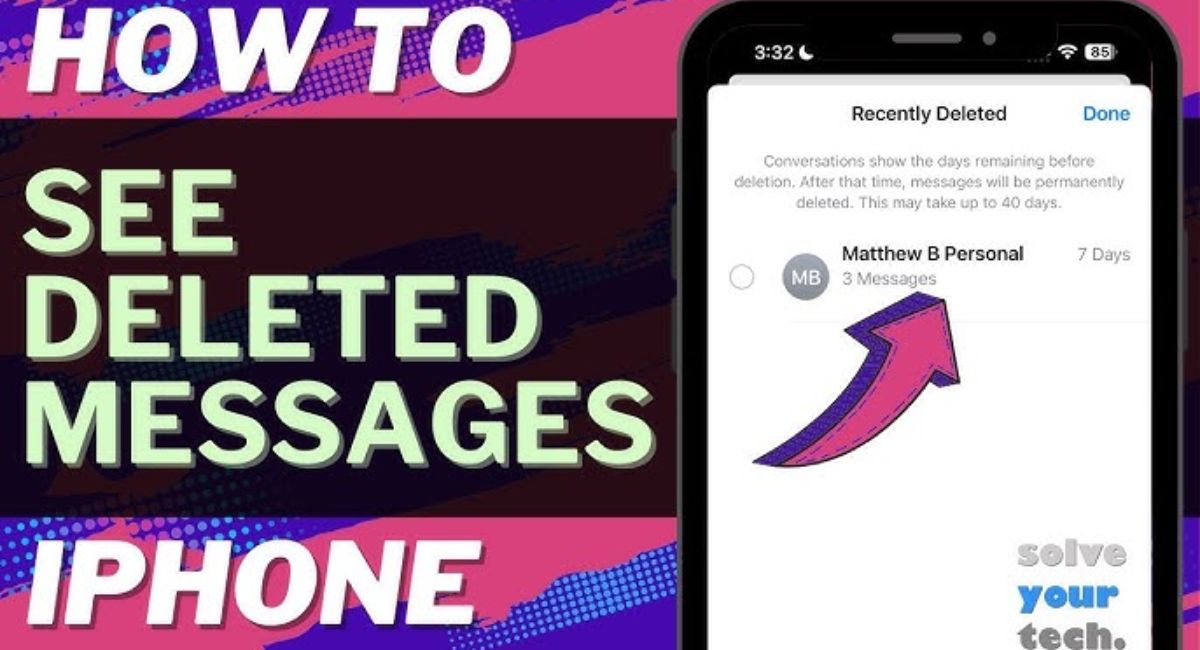
Deleting a text message on your iPhone can feel harmless until you suddenly need it again. Maybe it was a work address, a verification code, or an emotional message you didn’t want to lose forever. If you’re searching for how to see deleted messages on iPhone, the good news is that recovery is often possible.
Apple now offers tools like the Recently Deleted folder iPhone, and backups can also help you restore lost chats. In some cases, you can even recover deleted messages on iPhone using iCloud or iTunes methods. This guide will show you the safest ways for iPhone message recovery step-by-step.
Understanding iTunes Backup and How Message Recovery Works
When you back up your iPhone using iTunes, the system creates a snapshot of your device. This snapshot includes messages, settings, app data and other personal files. If your deleted messages existed when the backup was made, you can restore that backup and bring them back. That’s why this method works so well for people who want to restore deleted text messages iPhone without guessing.
This is also the main reason people search for how to find deleted messages on iPhone after accidentally clearing conversations. The backup stores older data in a locked archive. Once you restore, the old data returns like a time machine. This is the classic way to retrieve deleted SMS on iPhone and even recover iMessages on iPhone if the backup date matches.
| Backup Type | Stores Messages? | Easy to Restore? | Risk of Data Loss |
| iTunes Backup | Yes | Yes | High |
| Finder Backup | Yes | Yes | High |
| iCloud Backup | Yes | Medium | High |
| Recently Deleted | Yes | Very Easy | Low |
The biggest advantage is reliability. The biggest downside is replacement. You don’t just recover messages. You roll your phone back in time.
Things to Check Before Restoring Deleted Messages
Make sure that your iPhone has something usable as a backup before you dive into the process of restoring. Most users think that iTunes has some sort of automatic backup but this is not always true unless you plug in and sync. Open iTunes and look at the list of backups. Provided that you deleted the texts later than the backup date, then it will do no good. You have to have a more recent backup containing those lost chats.
You also need to verify whether you have the iCloud syncing of messages. With the iCloud Messages on, it might not store your messages completely on the iTunes backups.
This detail confuses many users trying iPhone Messages app recovery. It’s also why some people fail to find deleted iPhone SMS even after a restore. The system may have synced deletion across devices, meaning the backup also removed them.
Here’s a simple checklist table before restoring:
| Check This First | Why It Matters |
| Backup date | Must be before deletion |
| iCloud Messages enabled | Can sync deletions |
| Enough storage on iPhone | Restore may fail |
| Latest iTunes installed | Prevents restore errors |
| Lightning cable working | Connection issues cause interruptions |
A little checking saves hours of frustration. This is the smartest step in recover messages from iPhone backup.
How to see Deleted Messages on iPhone Using iTunes Backup (Step-by-Step)
The first thing to do to get your system restored is to have a windows PC or an old Mac that still has iTunes. 1) First plug iPhone to PC/Mac with a stable cable. Launch iTunes and press the little iPhone icon in the top. Then select “Restore Backup.”Choose the backup that was created before the deletion happened. This is the main process for how to see deleted messages on iPhone using iTunes backup in a clean and official way.
Once the restore begins, do not unplug your device. Your iPhone will restart several times. iTunes will also re-sync apps and settings. When the process finishes, your Messages app will reload. If the backup contains the missing chats, you’ll see them again. This method is one of the strongest ways to restore deleted texts from backup and is trusted for deep iPhone message recovery.
Now let’s make it simple with a step list (no bullet points, only numbered steps):
- Open iTunes on your computer
- Plug in your iPhone using a Lightning cable
- Click the iPhone icon inside iTunes
- Select “Restore Backup”
- Choose the correct backup date
- Wait for restore to finish completely
- Open Messages and check recovered conversations
A quick fact worth knowing: restoring can take 10 minutes or over an hour depending on backup size and internet speed.
How to Recover Deleted Messages Using Finder on Mac (Alternative Method)
If you use macOS Catalina or newer, Apple removed iTunes. Finder replaced it. The good news is Finder backup recovery works almost the same. You plug in your iPhone, open Finder and select your device from the left sidebar. Then you click “Restore Backup.” This makes Finder the best option for modern Mac users trying how to see deleted messages on iPhone using iTunes backup, even though iTunes itself is gone.
Finder restore is also very stable because it’s built directly into macOS. It supports encrypted backups and often works faster than older iTunes versions. Many users report fewer error messages. If you want to recover deleted messages on iPhone in a smooth way, Finder is the cleanest Apple-approved alternative. It is still full iPhone message recovery because it restores messages, iMessages, attachments and even old conversation threads.
Here is a simple comparison table:
| Feature | iTunes Restore | Finder Restore |
| Works on Windows | Yes | No |
| Works on new Mac | No | Yes |
| Supports encrypted backups | Yes | Yes |
| Easy interface | Medium | Easy |
| Recommended in 2026 | Only Windows | Best for Mac |
If you own a Mac, Finder is your modern recovery tool. If you use Windows, iTunes is still your best bet.
What Happens to Your Current Data After Restoring an iTunes Backup
This is the part people don’t want to hear. When you restore an iTunes backup, your current iPhone data gets replaced. That means recent photos, new apps, latest settings and current text messages may disappear. Your phone becomes exactly like it was on the backup date. That’s why restoring is powerful but risky. This is also why people often look for recover deleted messages without backup, because they fear losing current data.
If your iPhone contains new messages you can’t lose, you should save them first. Take screenshots, forward them or copy them into Notes. Another smart idea is to back up your current phone to iCloud before restoring. This way you can restore the old backup, retrieve the deleted messages and then return to your newest backup later. It takes effort but it can save your most important files.
Here is a simple risk table:
| What You May Lose | Why It Happens |
| New text messages | Backup overwrites Messages |
| Recent photos | Backup restores older library |
| New app data | Apps roll back to old versions |
| Settings changes | Restored settings replace current ones |
Restoring helps you recover, but it also rewinds your phone. Think of it like switching to an older version of your life.
How to see Deleted Messages on iPhone After iTunes Restore
After the restore finishes, open your Messages app and scroll through conversations. Most recovered messages appear exactly where they were before. If you deleted a full conversation thread, it should return. If you deleted only a few texts, they may reappear inside the existing chat. This is where patience matters. Messages sometimes take time to fully load after restore because the phone indexes data again.
A smart trick is to use the search bar inside Messages. Search by a keyword, phone number or name. This works well if you remember a unique word in the missing text. Many people panic because they don’t see messages instantly. In reality, your iPhone may still be syncing restored content. Give it time. This step is crucial for anyone trying how to find deleted messages on iPhone after using a backup method.
Here’s a quick table to help you locate recovered texts faster:
| Search Method | Best For |
| Search by phone number | Finding a specific contact thread |
| Search by keyword | Locating a message sentence |
| Search by date range | Tracking older conversations |
| Scroll manually | Recovering full deleted threads |
Once messages appear, consider exporting important ones. Don’t trust your memory again.
Common Problems While Restoring iTunes Backup and Fixes
The restore process does not sometimes work due to the inability of iTunes to acknowledge your iPhone. This normally occurs due to a version of iTunes that is old, faulty cable or lack of the Apple drivers. Always back up iTunes then restore afterwards. Be sure to unlock your iPhone before connection also. In case your iPhone keeps disconnecting, you should change the USB ports. A USB hub is not as good as a direct connection.
One more typical mistake is such error codes as 4013 or 9. Such mistakes usually occur due to dipping off of the connection or security programs blocking iTunes. Reboot your computer and turn off antivirus. In case of the restore freezing, then panic not. Wait at least 10 minutes. At times it may appear to be frozen but it keeps on going in the background.
These troubleshooting steps matter if you want a successful restore deleted text messages iPhone process.
Here is a table of common errors and fixes:
| Problem | Likely Cause | Fix |
| iPhone not detected | Cable or driver issue | Change cable, update iTunes |
| Restore stuck | Slow sync process | Wait, restart if needed |
| Error 4013 | Connection failure | Switch USB port, restart |
| Backup corrupted | Damaged backup file | Try older backup |
| Not enough storage | Backup too large | Free space on iPhone |
If you keep getting errors, Finder on Mac may work better. Windows users should reinstall iTunes if needed.
Can You Recover Messages Without Restoring the Whole iPhone?
Yes, sometimes you can. The problem is Apple doesn’t officially allow extracting only messages from an iTunes backup. Their method always restores everything. That’s why many people use iPhone data recovery software to pull messages without resetting their device. Some tools scan the backup file and let you preview texts before restoring. This is a smarter method if you don’t want to lose new data.
One popular tool is FoneLab iPhone Data Recovery. It claims you can scan iPhone for deleted messages and preview lost SMS, iMessages and attachments. Many users prefer it because it allows deleted files recovery with less risk. However, always download recovery tools from official sources and avoid shady software. Some fake apps steal data. If you choose this path, pick trusted programs and read reviews carefully.
Here’s a comparison table to help you decide:
| Method | Requires Full Restore? | Risk Level | Best For |
| iTunes restore | Yes | High | Full recovery |
| Finder restore | Yes | High | Mac users |
| Recovery software | No | Medium | Extracting messages only |
| Recently Deleted folder | No | Low | Recent deletions |
If you care about current data, third-party tools may be the safer route. Still, backups remain the most reliable option.
Best Tips to Prevent Losing: How to See Deleted Messages on iPhone Messages in the Future
The best solution is prevention. First, back up your iPhone regularly. A weekly backup is a smart habit for most people in the USA. If you rely on iMessages for work, consider daily backups. You should also enable iCloud backup so you have a second safety net. That way you can restore iPhone messages from iCloud if iTunes fails. This gives you better protection and stronger iCloud backup message recovery options.
store them on your computer or save them as PDF. Others go to an extent of copying major texts to Notes. It is retro-futuristic, and it works. The truth is simple. Messages are fragile. One wrong tap and they vanish. In order to recover iOS 16 deleted messages, iOS 17 deleted messages recovery and iOS 18 deleted messages recovery without any stress, regular backup is the most effective tool.Here’s a simple backup routine table:
| Backup Routine | Best For |
| Weekly iTunes backup | Average users |
| Daily iCloud backup | Heavy texters |
| Both iTunes + iCloud | Maximum protection |
| Manual export of key texts | Business and legal proof |
A small habit saves you from huge regret. Backups are boring, but losing messages is worse.
Quick Reference Table: Best Way how to See Deleted Messages on iPhone
| Situation | Best Solution |
| Deleted recently (under 30 days) | Recently Deleted folder |
| Deleted months ago | iTunes or Finder restore |
| No backup available | Recovery software |
| Need messages but can’t lose new data | Backup extraction tool |
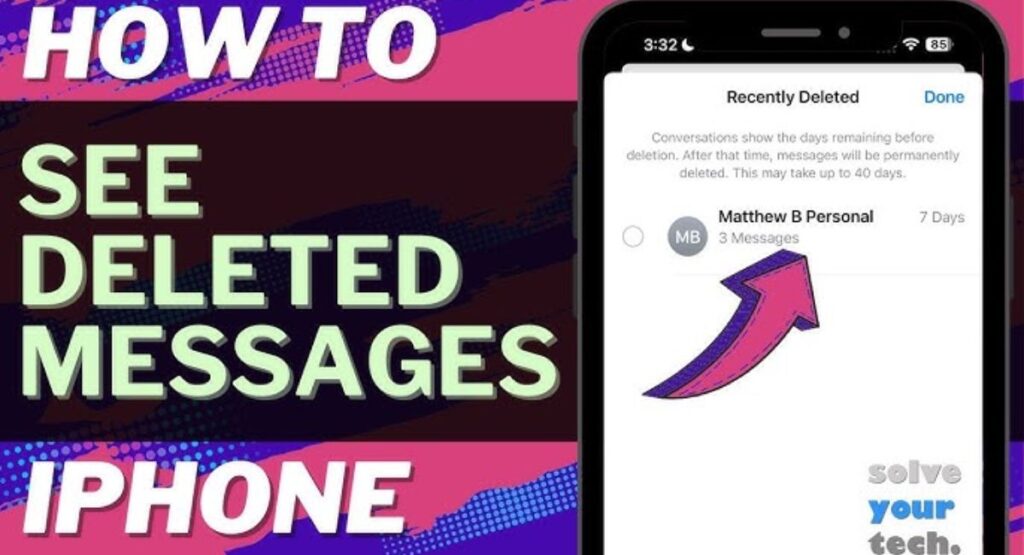
Conclusion: How to See Deleted Messages on iPhone Using iTunes Backup
In case you are interested in the most reliable process, you have to learn how to access deleted messages on the iPhone through iTunes backup. It is effective as the backups save the previous versions of your Messages database. When you restore, you are able to recover lost SMS and iMessages in minutes.
Nevertheless, never forget about the down. Recovery of a backup will overwrite your new data. You can safely recover deleted messages on iPhone, keep you current files safe and prevent future panic provided that you take your time. Backup is not a thrilling process but it is your ultimate online guarantee.
FAQs: How to See Deleted Messages on iPhone
Is it possible to see deleted messages on an iphone?
Yes, you can restore them either on iCloud backup or iTunes in case there is one.
What is the method to recover lost text messages?
Recover iCloud or iTunes backup that has the deleted messages.
Where is the concealed messages on iPhone?
Turn on the Messages app filters, concealed photos or third-party applications where messages could be kept.
Am I allowed to view the deleted text messages of my husband?
Only with his iCloud account or device backup.
What is the way to view deleted messages history?
Review the history of deleted messages using iCloud and iTunes backup or third party recovery software.
What is my view of message history on my iPhone?
Messages Open the Messages app and browse your conversations or retrieve older messages in a backup.
